|
|
|
|
|
|
 |
International Competition of Urban Economy |
 |
|
| | Last update: 2026/09/15 | |
|
International Competition of Urban Economy
In the Name of God
The Iranian Urban Economics Scientific Association plans to hold an international academic competition on the subject of urban economics in the year 1404. All interested individuals are hereby invited to participate. The competition will take place from 1404/09/09 to 1404/10/30, and valuable prizes will be awarded to the top participants.
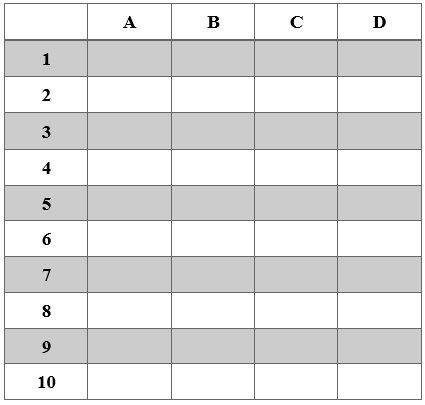
Please send an image of your answer sheet to the Association's email address: Info iuea.ir. iuea.ir.
Theme: Urban Economics & The Future of CitiesQuestions: 20 Multiple-Choice QuestionsTime: 30 Minutes
Question 1 — Urban Land Economics
Suppose a new metro station is constructed in a previously poorly connected neighborhood. Holding all other factors constant, what is the most likely immediate economic effect?
A) Land values near the station decrease because of higher population density
B) Land values near the station increase because accessibility improves
C) Land values remain unchanged because transportation has no effect on land markets
D) Land values decrease because commuting becomes more expensive
Question 2 — Housing Markets
In a city where housing supply is highly inelastic, a large increase in housing demand is most likely to result in:
A) A small increase in prices and a large increase in housing quantity
B) A large increase in prices and a relatively small increase in housing quantity
C) A large decrease in prices
D) No change in housing prices
Question 3 — Urban Transportation
A city introduces a congestion charge for vehicles entering its central business district during peak hours. The primary economic rationale for this policy is to:
A) Increase private car ownership
B) Internalize the external cost imposed by congestion
C) Reduce public transportation use
D) Increase the supply of urban land
Question 4 — Spatial Economics
Two neighborhoods have identical housing characteristics, but one is located significantly closer to major employment centers. According to the basic monocentric city model, the more accessible neighborhood will generally have:
A) Lower land prices
B) Higher land prices
C) Identical land prices
D) No residential demand
Question 5 — Urban Externalities
A factory located inside a densely populated urban area generates air pollution that affects nearby residents. From an economic perspective, this is an example of:
A) A positive consumption externality
B) A negative production externality
C) A public good
D) A natural monopoly
Question 6 — Public Transportation
A city invests heavily in a new rapid transit system. Which outcome is most consistent with the concept of a "transit-induced land value effect"?
A) Property values near stations may increase
B) Property values near stations must always decrease
C) Transportation investment has no effect on land markets
D) Land becomes economically irrelevant
Question 7 — Housing Policy
Suppose a city imposes a strict rent ceiling below the market equilibrium rent. Which unintended consequence is most likely in the long run?
A) Increased incentives to supply rental housing
B) Excess supply of rental housing
C) Reduced incentives for landlords to maintain and supply rental units
D) Elimination of housing demand
Question 8 — Urban Inequality
A city experiences rapid economic growth, but most of the additional income accrues to high-income households while housing costs rise substantially for low-income residents. Which statement is most accurate?
A) Economic growth necessarily eliminates urban inequality
B) Economic growth can occur simultaneously with increasing income and spatial inequality
C) Rising housing costs always benefit low-income households
D) Urban inequality is unrelated to housing markets
Question 9 — Environmental Economics
A city wants to reduce carbon emissions from private vehicles. Which policy most directly applies the "polluter pays" principle?
A) Providing free parking in the city center
B) Subsidizing fuel consumption
C) Introducing a carbon or congestion tax on vehicle use
D) Increasing the number of highways without additional charges
Question 10 — Urban Public Finance
Which of the following is generally considered an appropriate source of local government revenue for financing services that primarily benefit local residents?
A) Property taxation
B) International trade tariffs
C) National monetary policy
D) Central bank interest rates
 |
|
|
|
|
|
|
|
|
|
|
|
|
|
|
|
|
|
|
|
|